


IISER Kalyani PhD Scholar’s Death Sparks Debate on Mental Health, Harassment, and Institutional Accountability
Kalyani, August 9, 2025 — A 24-year-old PhD student at the Indian Institute of Science Education and Research (IISER), Kalyani, died after a prolonged struggle with mental health issues and repeated allegations of harassment by a fellow researcher.
His death has reignited anger and debate over the treatment of students in India’s top academic institutions and the glaring lack of effective mental health support systems.
🆘 A Cry for Help That Went Unheard
Roy’s family was told the cause was “sudden heart failure”, but his social media posts suggest a much more complex reality.
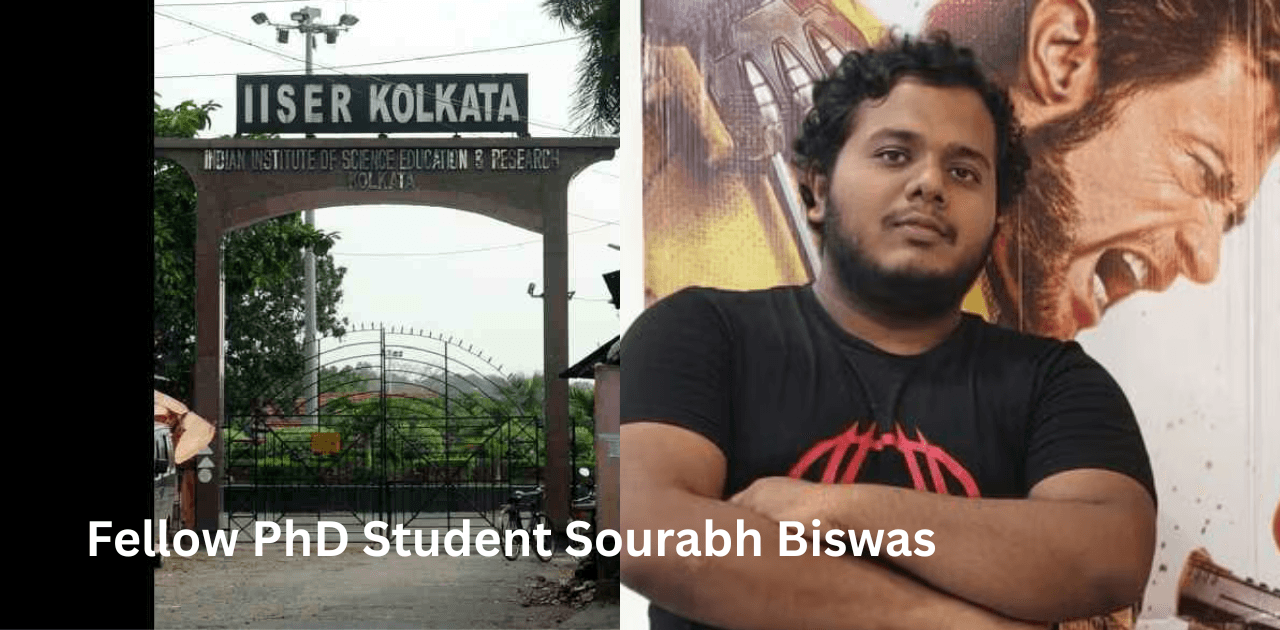
In messages — some written just hours before his death — Roy described battling depression since the age of 14, alongside repeated harassment from fellow PhD Scholar Sourabh Biswas.
Despite filing multiple complaints with his supervisor, Anindita Bhadra, and the institute’s anti-ragging cell, Roy claimed no action was taken.
He alleged that officials seemed more concerned with protecting the lab’s reputation than addressing his grievances.
📜 Allegations of Harassment in the Lab
Roy recalled a specific incident on April 12 when PhD Scholar allegedly shouted at him for an extended period.
In his own words:
“I guess I was never meant to be in this world. Yes, I did find some good people, some friends, some bits of love here and there. But I can’t do this anymore. I give up. May I find the peace in death that I never found in life.”
He also accused his supervisor of publicly praising Biswas despite alleged “scientific misconduct” — a claim yet to be independently verified.
🧠 Early Struggles and Autism Diagnosis
Roy, who was on the autism spectrum, spoke openly about experiencing physical and mental abuse from his parents during childhood.
This early trauma, combined with neurodivergence, left him more vulnerable to bullying and social exclusion.
His experience reflects a broader truth:
Studies from the Rajiv Gandhi National Institute of Youth Development and Human Rights Watch show that children with disabilities — visible or invisible — face disproportionately high levels of violence and exclusion, both at home and in educational settings.
🏛 Institutional Silence
IISER Kalyani has confirmed Roy’s death but has not commented on the harassment allegations.
Some peers claimed he had a recent argument with a lab guide before his health deteriorated.
Police have launched an inquiry; the post-mortem report is awaited.
⚖ Supreme Court on Mental Health in Education
Just weeks before this incident, on July 26, the Supreme Court of India declared mental health a basic right under Article 21 of the Constitution.
The court issued 15 interim guidelines until comprehensive laws are passed, urging institutions to:
Draft a common mental health policy.
Set up dedicated mental health support cells.
Handle harassment complaints promptly and confidentially.
The Court cited NCRB’s 2022 report “Accidental Deaths and Suicides in India”, describing student suicide rates as a “deeply distressing picture.”
📢 The Big Talk
Bullying continues to plague higher education, especially in competitive research environments.
Institutions often fail to act on harassment complaints, leaving victims feeling silenced.
Neurodivergent students face additional academic and social challenges.
The urgent need for stronger mental health support systems in academic spaces cannot be overstated. Also Read
Closing Note
While the investigation continues, Roy’s death stands as a painful reminder of how vulnerable students can feel when genuine support systems are missing. In high-pressure academic settings, mental health often takes a backseat to performance, and complaints of harassment risk being ignored in the name of institutional reputation.
This tragedy should be a wake-up call for universities to actively prioritize student well-being — not just in policy, but in practice. Creating safe, inclusive, and responsive environments is not optional; it’s essential. Roy’s final words should inspire change so that no student in India’s academic institutions feels unheard, unsafe, or pushed to the point where peace can only be imagined in death.