


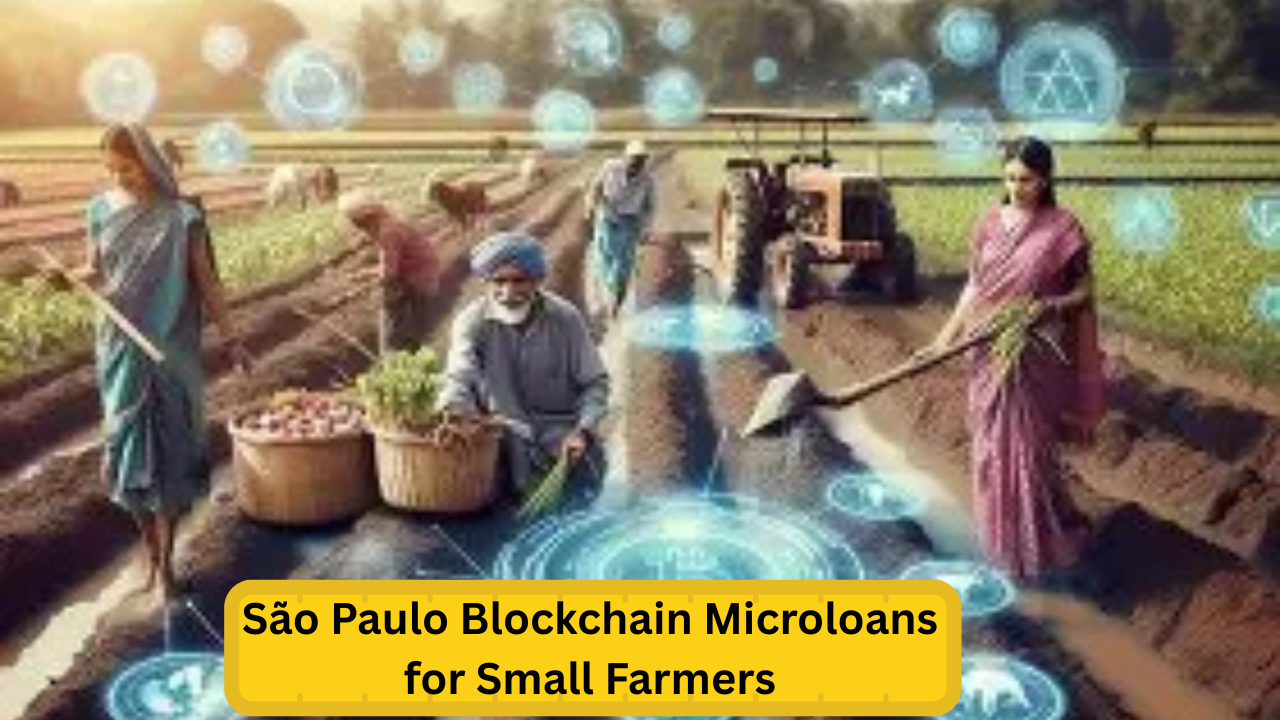
São Paulo, Brazil’s largest economic hub, is preparing to launch a government-backed blockchain microloan program designed to support small rural producers. The project is being carried out with the help of the Brazilian fintech company Tanssi, which created the project’s unique blockchain technology.
The program follows a successful pilot conducted in Santo Antônio da Alegria, where a token-based local currency system was tested to distribute municipal aid. Now, São Paulo’s city government is expanding the model to offer fast microloans of up to R$15,000 (approx. $2,800) to small-scale farmers across the region.
Blockchain Runs Only in the Backend
According to Luis Dal Porto, Tanssi’s Director of Business Development, the microlending service is expected to become fully operational next month, and the mobile application supporting the system is already live.
Dal Porto explained that although the system is blockchain-powered, farmers won’t interact with the technology directly:
“In practice, the blockchain isn’t even seen. It is a mobile app that they offer to producers. They also have physical payment machines. It is an entirely closed ecosystem they offer to achieve more control of how the credit is used and to mitigate risk.”
Why Tanssi Instead of Public Blockchains?
The team chose Tanssi’s blockchain framework over public networks such as Ethereum or Solana due to concerns about:
Performance
Transaction fee volatility
Network congestion
Unpredictability of costs
Public blockchains, Dal Porto noted, can experience spikes in fees or temporary slowdowns—issues that government-backed financial programs cannot afford. With public money involved, São Paulo authorities required predictable transaction fees and consistent reliability, both of which are challenging to guarantee on open, permissionless networks.
Tanssi’s technology allows developers to build dedicated blockchains or “appchains,” providing full control over performance and cost.
“They need predictability that they will spend that specific capital, and it won’t be more than that,” Dal Porto said. “If the fee goes up or down, it is a cost they cannot predict.”
Growth of Local Blockchain Initiatives
Even though Brazil’s central bank has slowed down the rollout of its national digital currency project, known as Drex, local and municipal blockchain initiatives continue to gain momentum.
The earlier Santo Antônio da Alegria pilot involved a token system for municipal aid, delivered through a controlled ecosystem accessible via a mobile app and physical payment terminals. The tokens were programmed with restrictions to prevent misuse—for example, blocking transactions related to gambling or sports betting apps.
São Paulo Rollout Coming Soon
With the pilot deemed successful, São Paulo’s full microloan program is scheduled to go live next month. Small farmers will be able to get money quickly through the app, and Tanssi’s blockchain infrastructure will allow officials to keep an eye on things and keep costs stable.
Brazil is using more and more blockchain solutions that are made for financial equality and government-backed programs. Another step in that direction is this initiative.